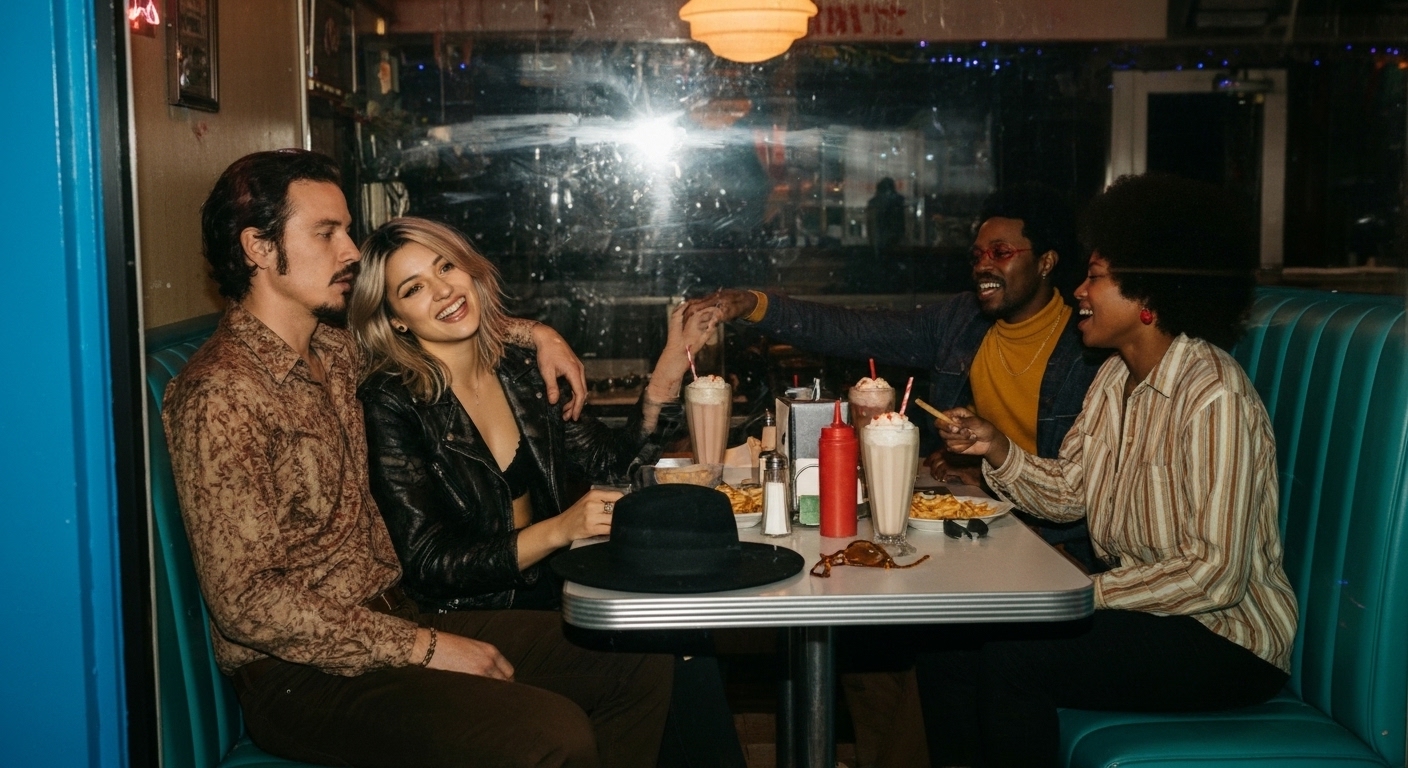
Thee Phoniques aren't a band you'll bump into at a bar — they're a world. Four souls written to play the soundtrack to 1970s dive bars and wet neon streets, conjured by a songwriter who wanted to build the perfect group to carry his songs.
Behind the four faces is one mind: Eric B. Thornton — songwriter, composer, and the Phil-Spector-meets-Mark-Ronson mastermind who writes every lyric, melody, and chord on acoustic guitar, then casts an imagined ensemble to bring them to life.
It's an old trick told a new way: a producer assembling the dream group in his head — and letting them live on record.
Every song, every photograph, every frame lives somewhere inside a single 1970s day — and the album travels through all of it, from the first amber light to the last spin of the disco ball.
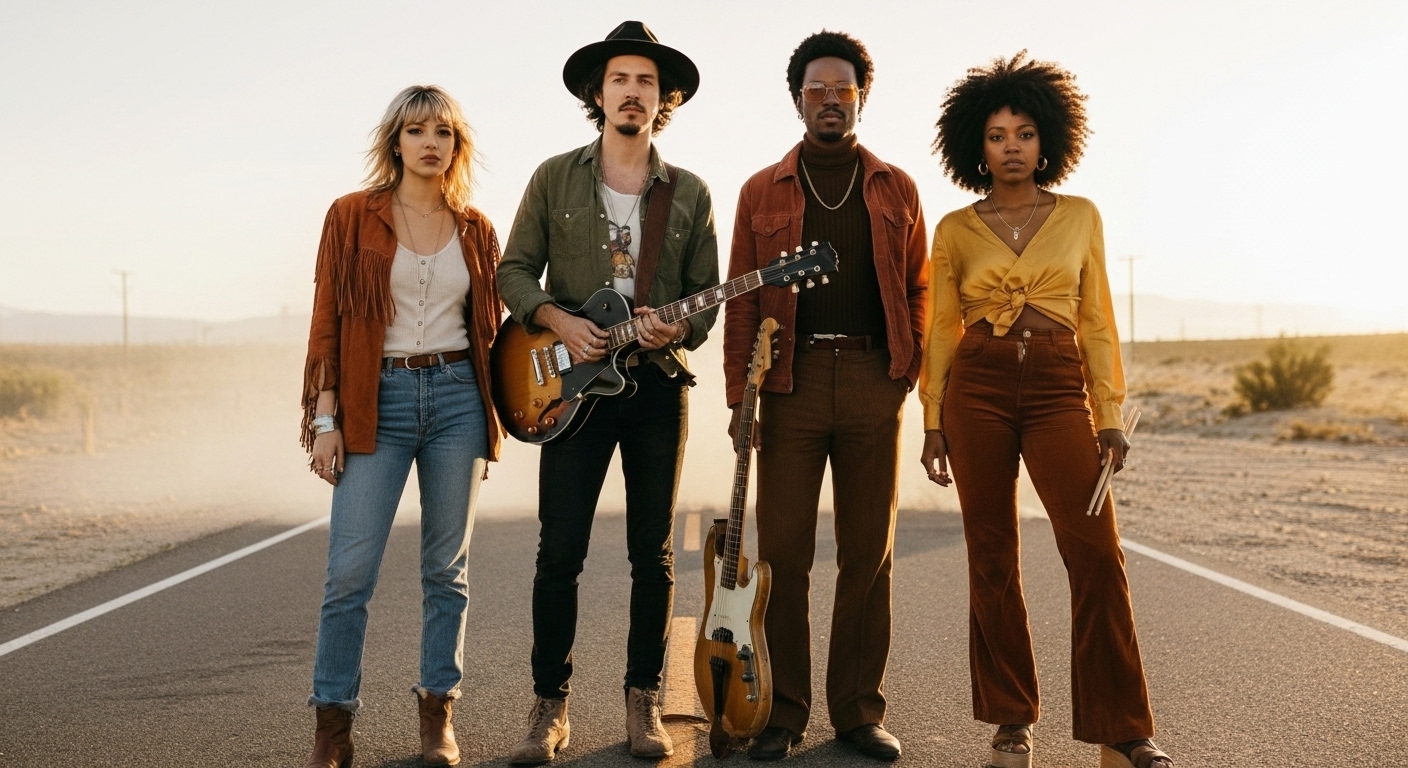
A living ensemble, each with a history, a sound, and a reason they play the way they do.
Born in a faded motel off Route 66 to an Indonesian lounge-singer mother and an American father, Maya — half Indonesian, half white — was raised writing lyrics on cardboard coffee cups in roadside diners. Guarded and sharp-tongued, she's drawn — helplessly — to the bittersweet afterglow of loving the wrong people, and she turns every wound into a song.
A quiet traveling philosopher from East L.A., Chico hitchhiked across the Southwest with a 1968 Sunburst Strat slung over his shoulder, meeting Jamal at a Tucson blues jam. He doesn't say much — he lets the crying, expressive solos speak for him.
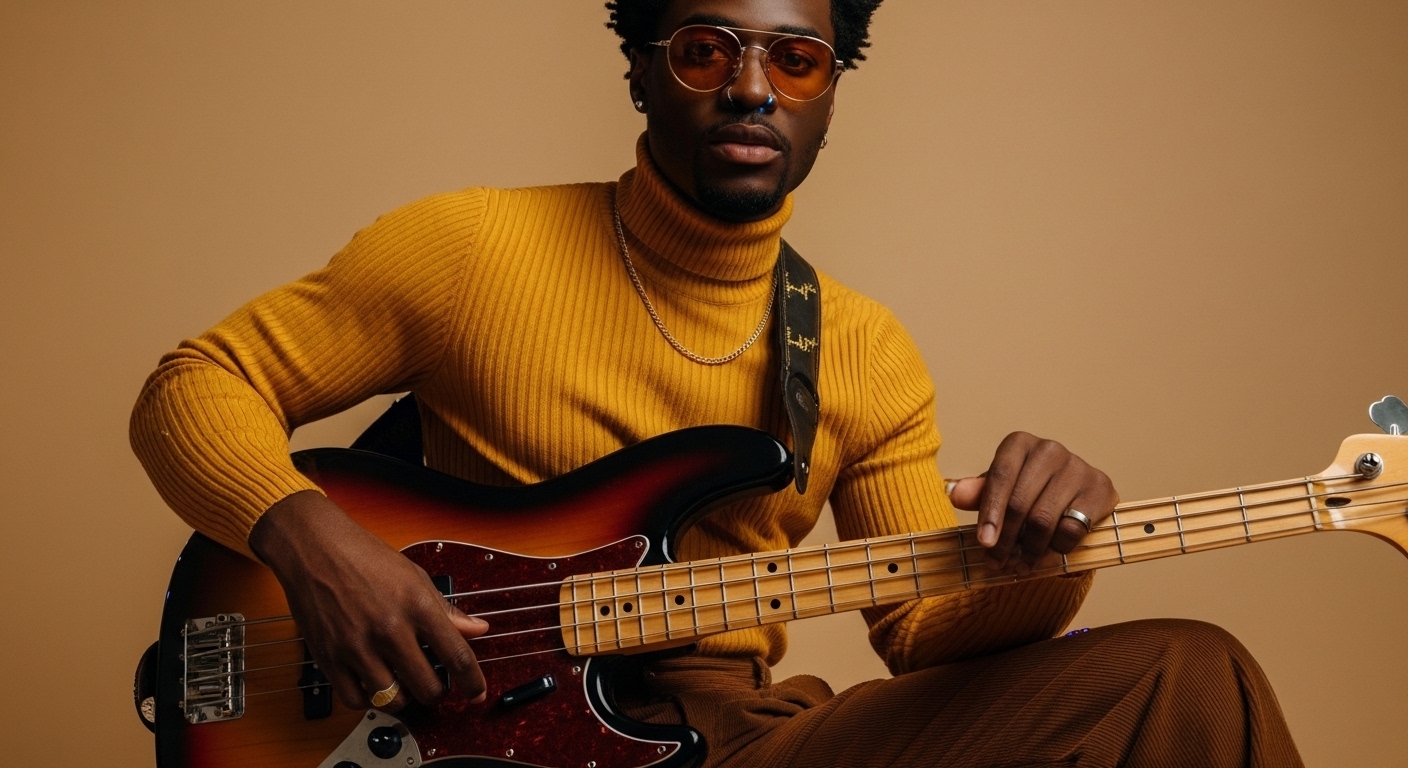
Raised on Stax and Motown in Detroit before heading West, Jamal is a self-taught bass virtuoso and the cool older brother of Selah. Smooth, laid-back, and unflappable, he's the mediator — the steady pocket everyone leans on when the room gets loud.
Jamal's younger sister learned to play on paint buckets in Detroit, and she's been the loudest person in every room since. High-energy and fiercely protective, she bonded with Maya over a shared distrust of "bullshit lovers" — and she drives the whole band from soul into nu-disco without breaking a smile.